
Almost every commercial kitchen has its canopy wiped down regularly. Far fewer have the ductwork behind it cleaned properly, and that is the part that matters — because ductwork is where grease accumulates out of sight, and where a fire travels once it starts.
This is what a real ductwork cleaning service covers, how it is priced, and how to tell whether you are buying one.
Why ductwork, specifically
The visible parts of a kitchen tell you nothing about the hidden ones. A canopy can be spotless while the horizontal duct run above the ceiling carries a heavy deposit and the fan housing is coated.
On a recent job in a West Wales pub kitchen, measured grease depth was 200 microns three metres down the duct run and at the fan — four times the 50-micron figure TR19 Grease uses as its cleaning trigger. The canopy, which staff wiped daily, looked fine.
That is the normal pattern, not an unusual one. Grease is carried in the airstream and deposits along the whole pathway, heaviest near the canopy and thinning with distance, but present throughout.
The fire risk follows directly. A duct run carrying a heavy deposit is a continuous combustible path from the cooking line, through the building fabric, to the roof. If a flare-up reaches the canopy, that is the route it takes — inside the ceiling void, hard to reach and hard to stop.
What a proper ductwork clean covers
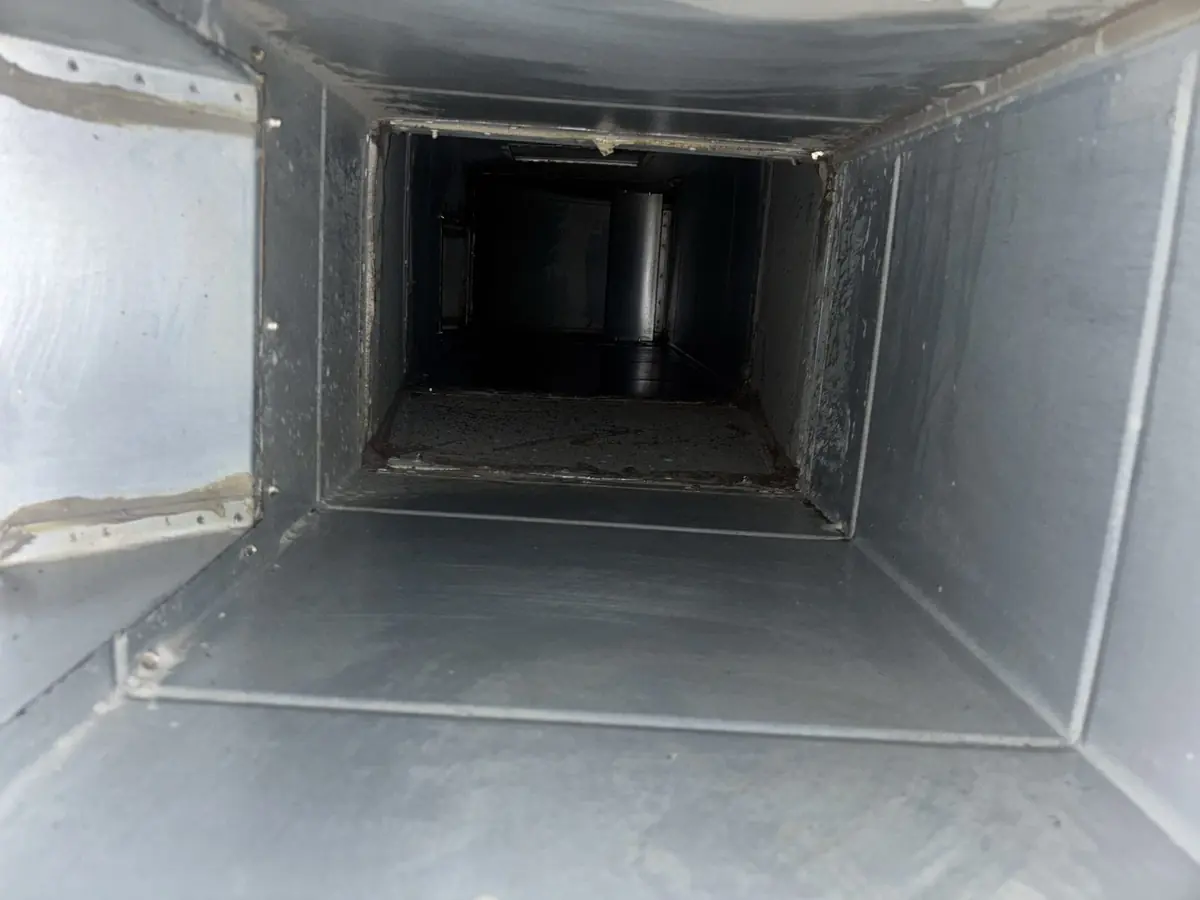
The full run, not the reachable bits
Canopy plenum, spigot risers, horizontal duct sections, bends and transitions, the fan and its housing, and the discharge ductwork to the termination point. A service that stops where the easy access is, is not a ductwork clean.
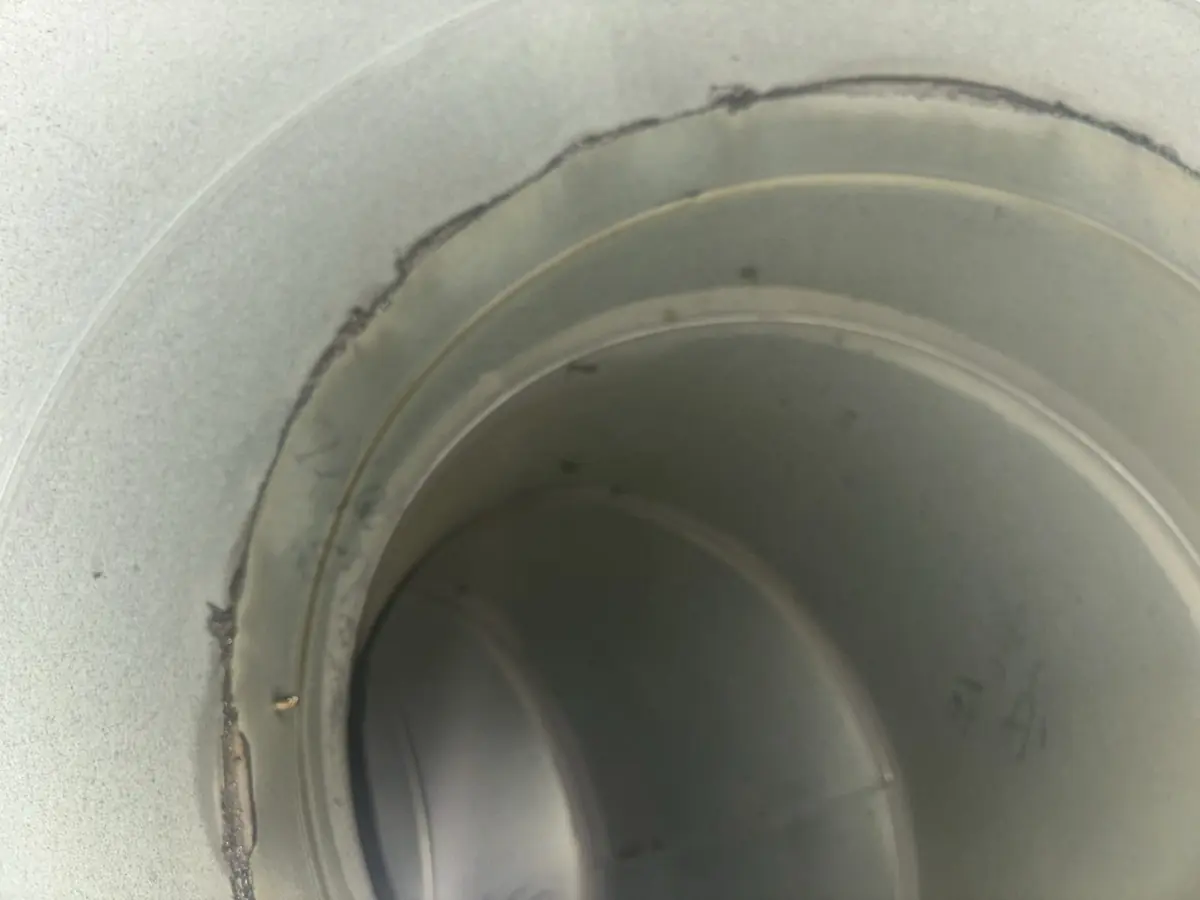
Measured verification
Wet film thickness readings in microns at defined test points, before and after. Without measurement there is no way to know what was achieved.
| Test point | Pre-clean | Post-clean |
|---|---|---|
| Canopy / extract plenum | 200 microns | Under 25 microns |
| Ductwork, 1m from canopy | 200 microns | Under 25 microns |
| Ductwork, 3m from canopy | 200 microns | Under 25 microns |
| Extraction fan | 200 microns | Under 25 microns |
Photographic evidence of internal surfaces
Taken through access panels, from consistent positions, before and after.
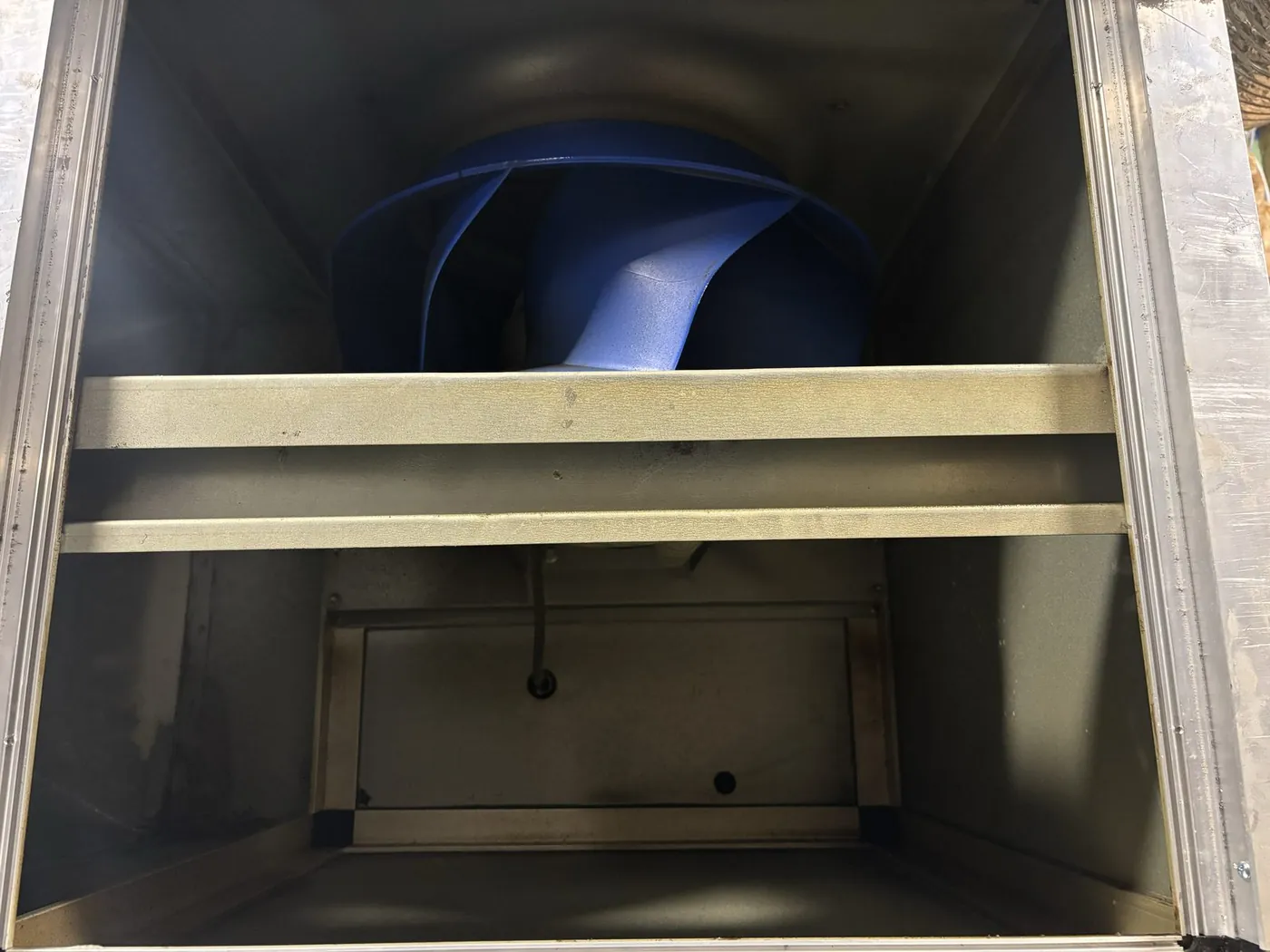
The fan
Grease thrown off the impeller builds on the blades and inside the housing, next to a running motor. It also unbalances the fan and reduces extraction across the whole kitchen — so cleaning it improves how the kitchen works, not just how safe it is.
An honest access report
Which sections were reached, which were not, and what would be needed to reach them.
What drives the price
Access is the single biggest factor. A system with adequate access panels at sensible intervals can be cleaned efficiently. A system with two panels and thirty metres of duct cannot be cleaned properly at all until panels are fitted — and fitting them is a separate cost.
After that:
- —Duct run length and complexity — bends, risers, transitions and roof runs all add time
- —Grease loading — a system at 200 microns takes materially longer than one at 60
- —Height and working conditions — loft voids, roof plant and confined spaces
- —Frequency — a maintained system on a six-month cycle costs less per visit than one cleaned after years of neglect
This is why fixed prices quoted over the phone without seeing the system are unreliable. Any contractor giving you a firm figure without asking about access is guessing, and the guess is usually corrected upwards on the day.
Questions worth asking before you book
1. How many test points will you take readings at, and will they be in the certificate? 2. Will you photograph inside the ductwork, before and after? 3. How far along the run will you clean — and how will you reach it? 4. What happens if you find sections you cannot access? 5. Does the price include the certificate and the next clean date?
A contractor who answers all five specifically is selling a ductwork clean. One who deflects is selling a canopy wipe-down with a certificate attached.
How often
TR19 Grease sets frequency by usage: light-use kitchens roughly annually, moderate use such as restaurants, pubs, hotels and care homes every six months, and heavy use such as takeaways and fish and chip shops every three.
Treat these as starting points and refine them from your own readings. A kitchen consistently coming in well under 50 microns at six months may be able to extend; one arriving at 200 microns needs to shorten.
Getting a quote
We arrange ductwork and kitchen extract cleaning through specialist providers across Pembrokeshire and West Wales, documented to the standard described above. Send us your kitchen details and we will arrange a tailored quote. There is no obligation.
Outside our area, take the five questions above to your local contractors — the answers will tell you quickly who is worth booking.
*Readings and photographs are from a real job carried out in Neyland, Pembrokeshire in May 2026, published with the site owner's permission. That pub is operated by the same owner as this website.*
Related Service
Duct Cleaning
Complete ductwork cleaning covering the full extract pathway — canopy through to discharge point.
Learn more about Duct CleaningAreas We Cover
We arrange kitchen extract cleaning quotes across all of Pembrokeshire and West Wales: