
Most kitchen extract cleaning is sold on trust. A contractor arrives, spends a few hours out of sight above your ceiling, and hands you an invoice. You have no real way of knowing what was done.
This is a record of one job, in full — a harbourside pub kitchen in Neyland, cleaned on 5 May 2026 — with the measurements that were taken, the photographs from inside the system, and the paperwork that came out at the end. It is the level of evidence any commercial kitchen in Pembrokeshire should expect.
The kitchen
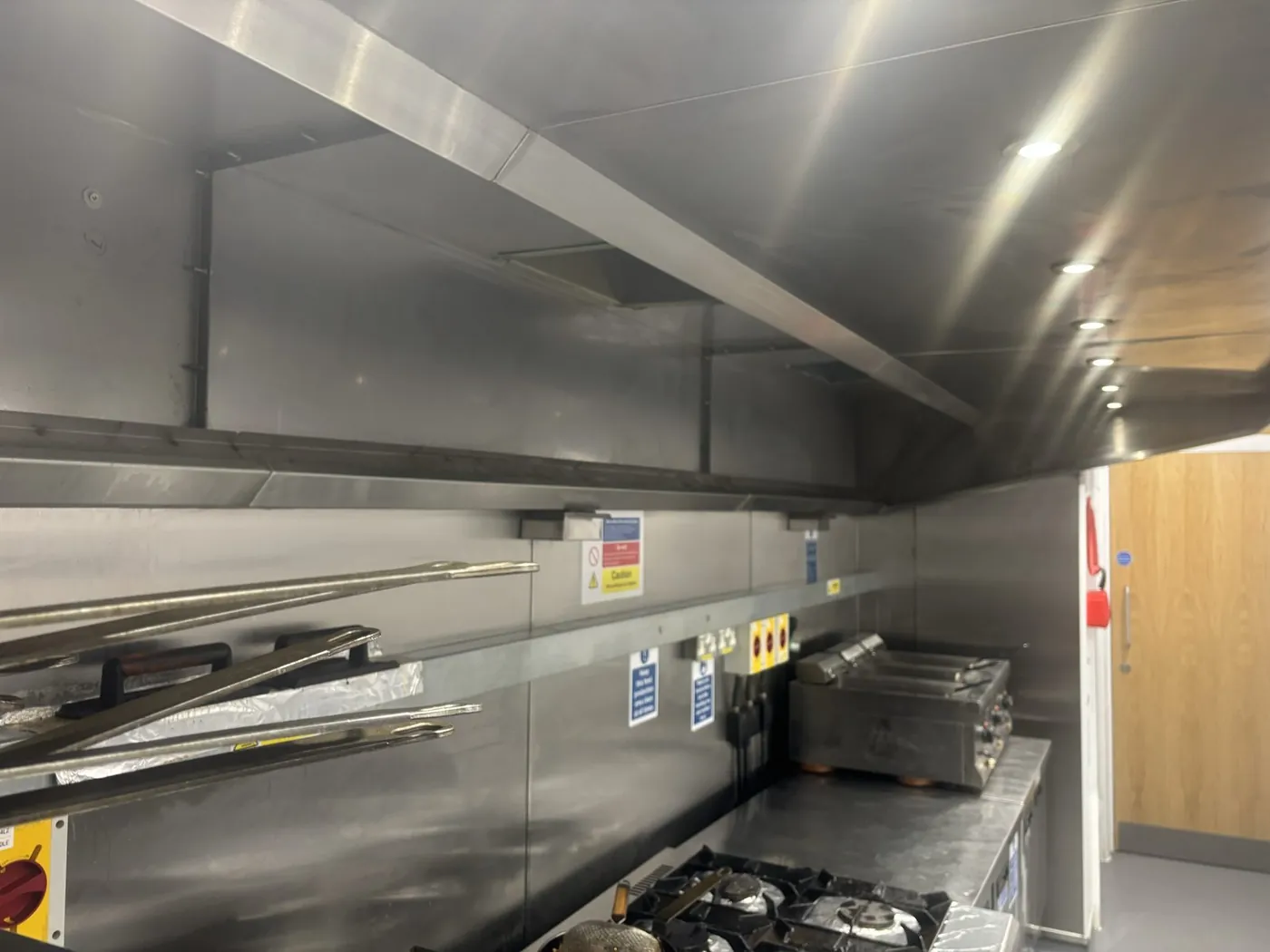
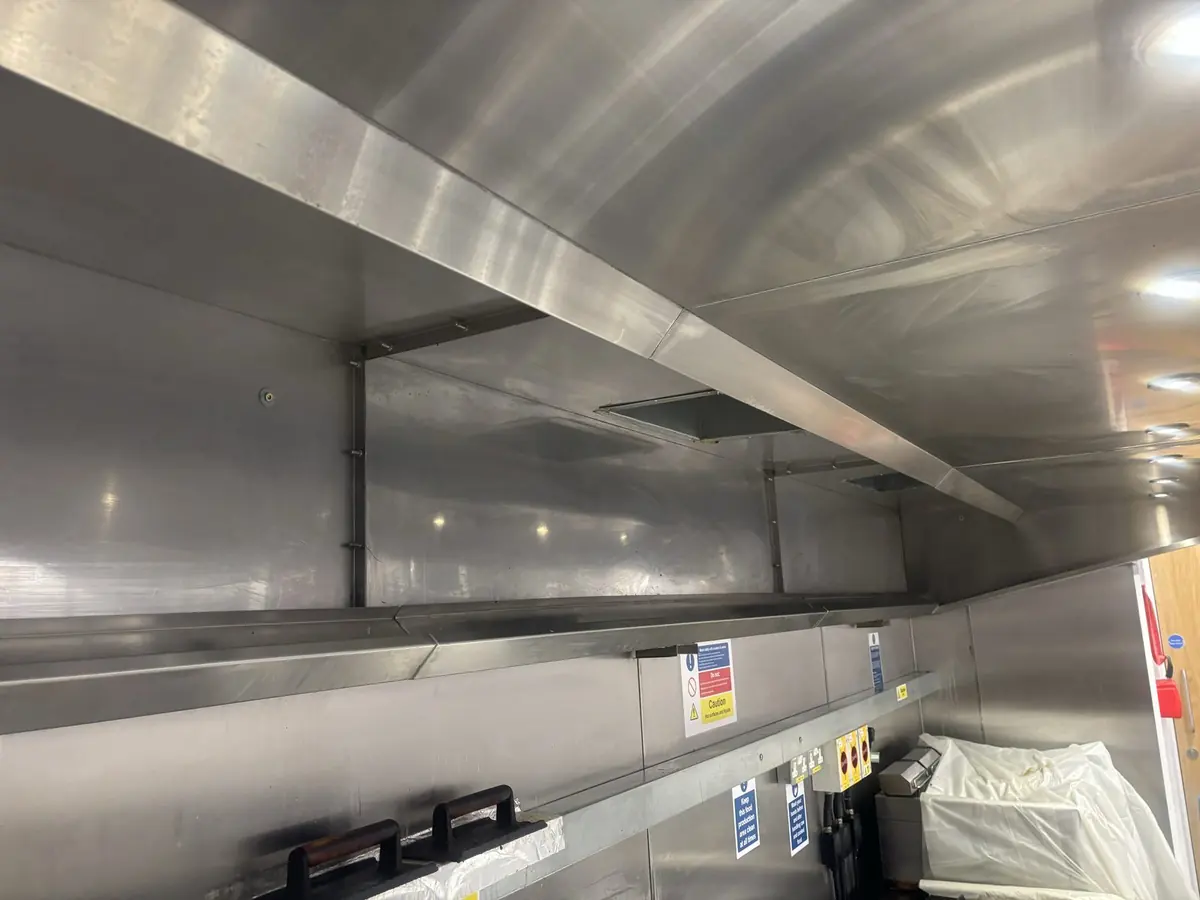
The Bar sits on Brunel Quay in Neyland, looking out over the marina. It runs a working commercial kitchen through the season: a single extraction canopy over the cooking line, with the extract system running up into the loft space and out through the roof.
The full system layout:
- —1 extraction canopy
- —3 canopy spigot risers rising vertically into the loft
- —A square ductwork section in the loft space where the three risers merge
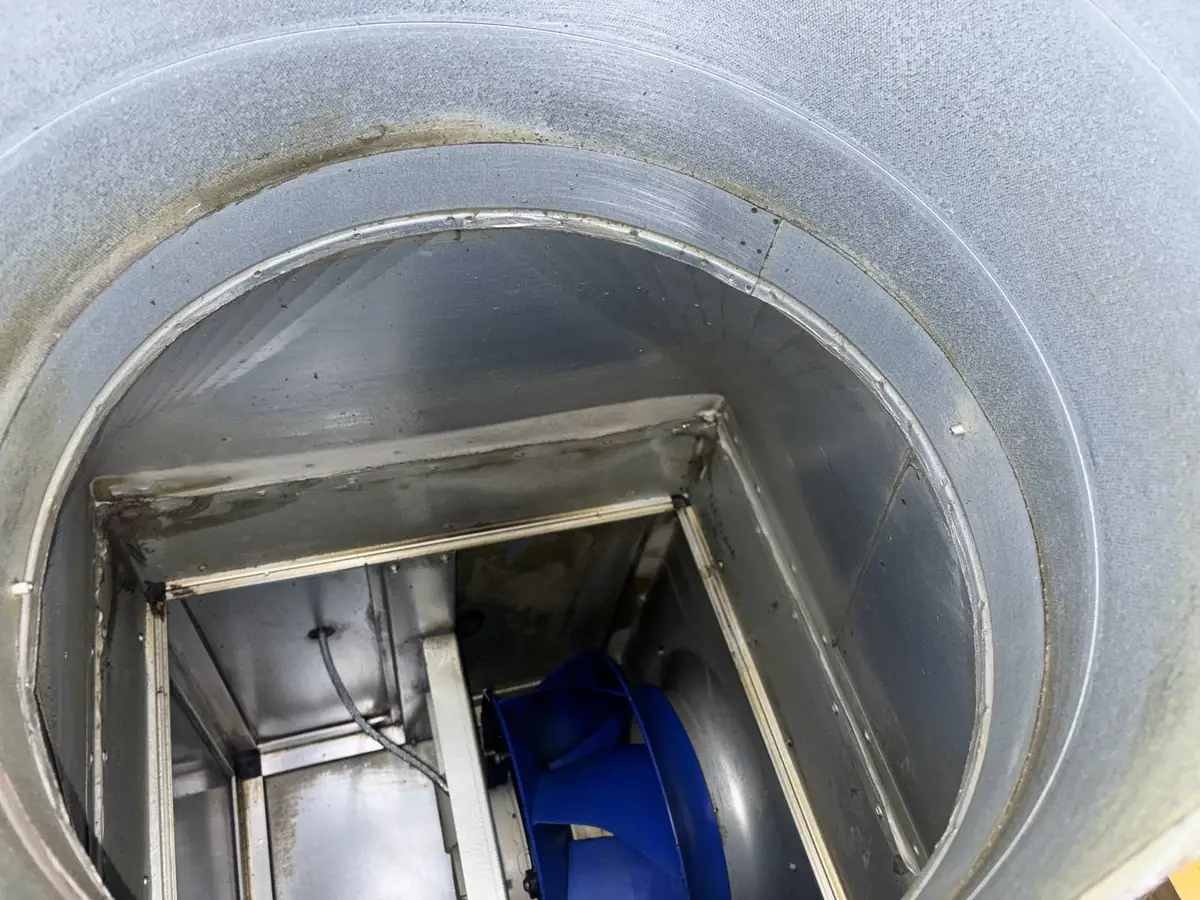
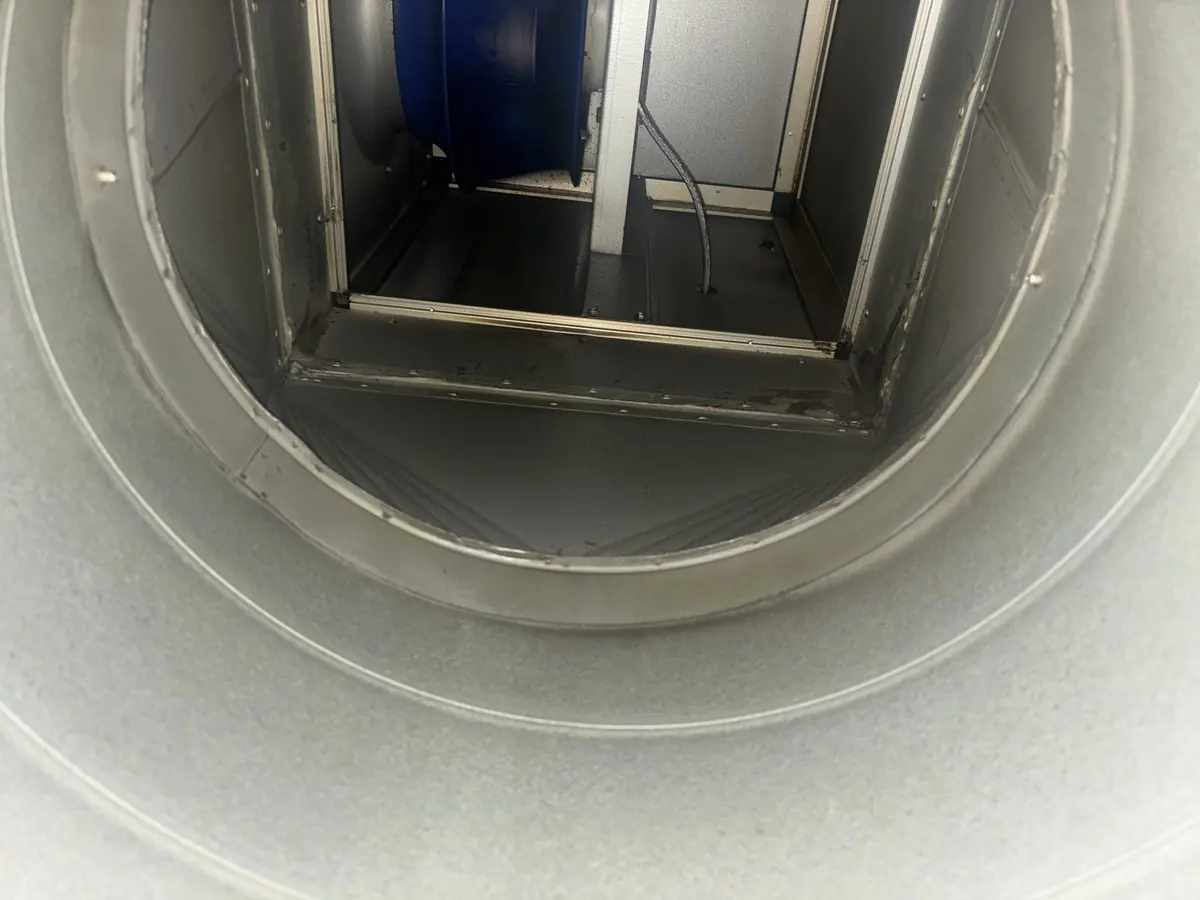
- —An inline extraction fan
- —Oval discharge ductwork running horizontally, then rising to the roof
- —Roof termination point
That is a fairly typical arrangement for a pub of this size, and it matters because grease does not accumulate evenly through it. The canopy is the part everyone can see and wipe down. The ductwork above the ceiling and the fan housing are where the problem actually builds.
The measurements
This is the part that separates evidence from assurance. Grease deposit is measured by wet film thickness, in microns, at defined test points through the system — before cleaning and again afterwards.
| Test point | Pre-clean | Post-clean |
|---|---|---|
| Canopy / extract plenum | 200 microns | Under 25 microns |
| Ductwork, 1m from canopy | 200 microns | Under 25 microns |
| Ductwork, 3m from canopy | 200 microns | Under 25 microns |
| Extraction fan | 200 microns | Under 25 microns |
| System average | 200 microns | Under 25 microns |
For context: TR19 Grease works to a mean grease depth of 50 microns as the trigger point at which a system requires cleaning. This kitchen was reading four times that figure throughout — not just at the canopy, but three metres down the duct run and at the fan.
That is not unusual. It is what six months of ordinary service does to a pub kitchen that cooks daily. Nothing had gone wrong here; the system was simply due.
What the photographs showed
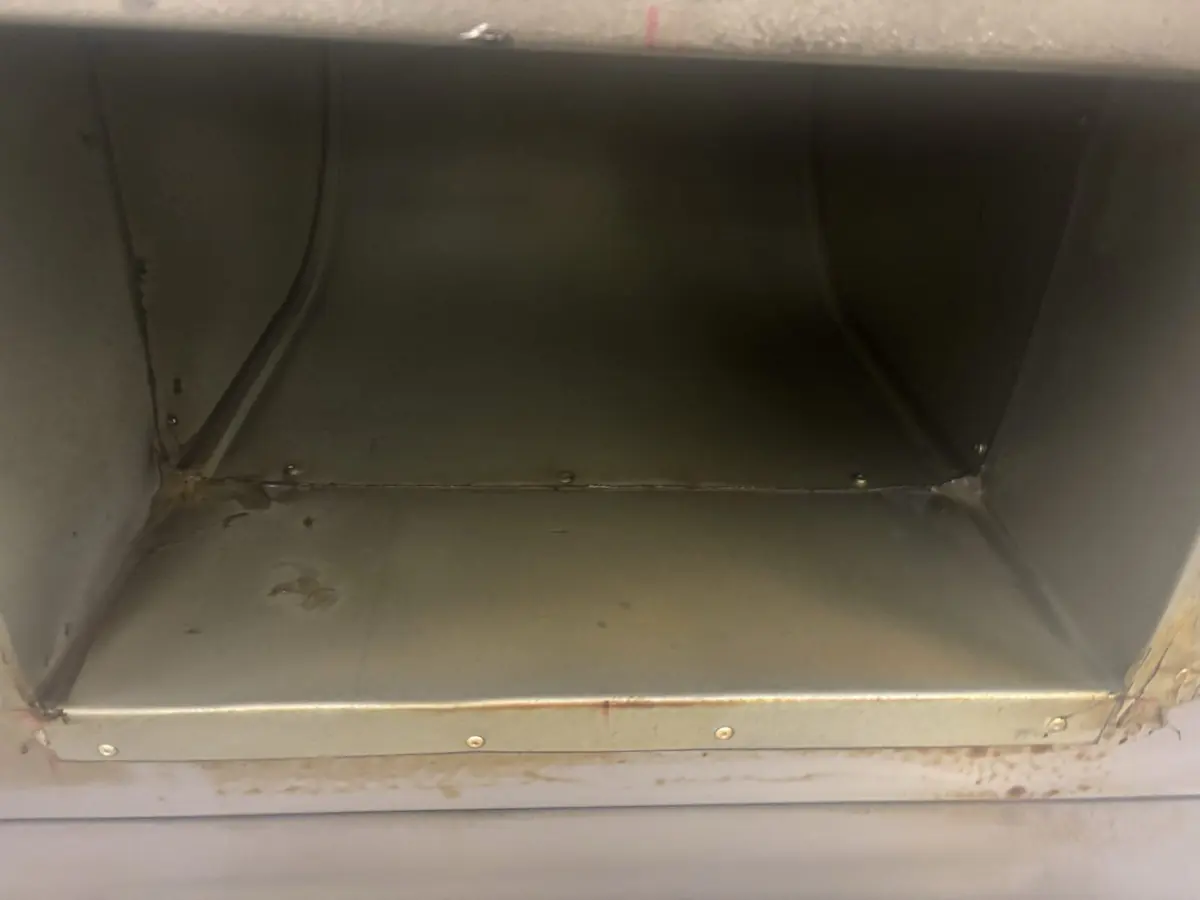
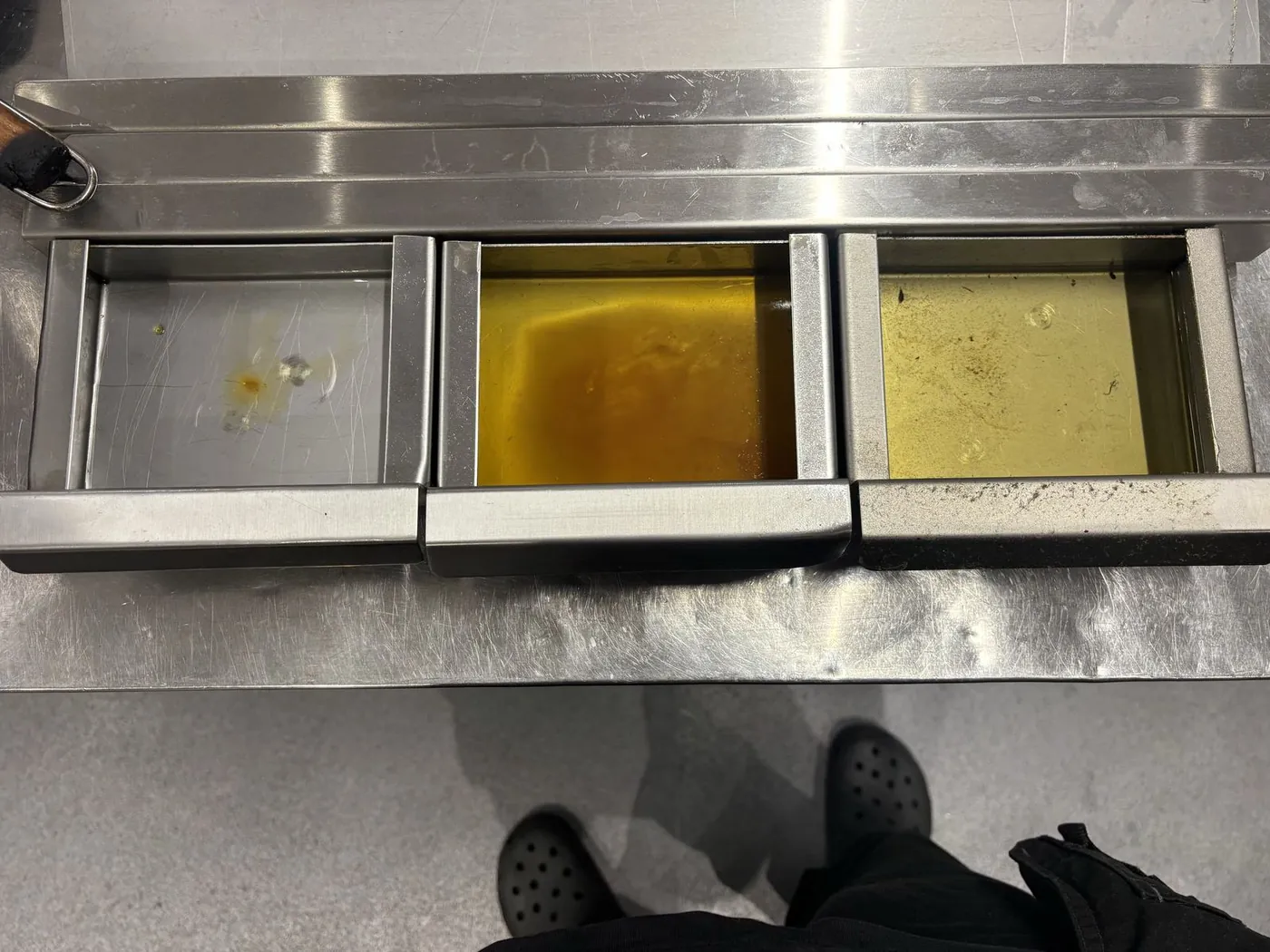
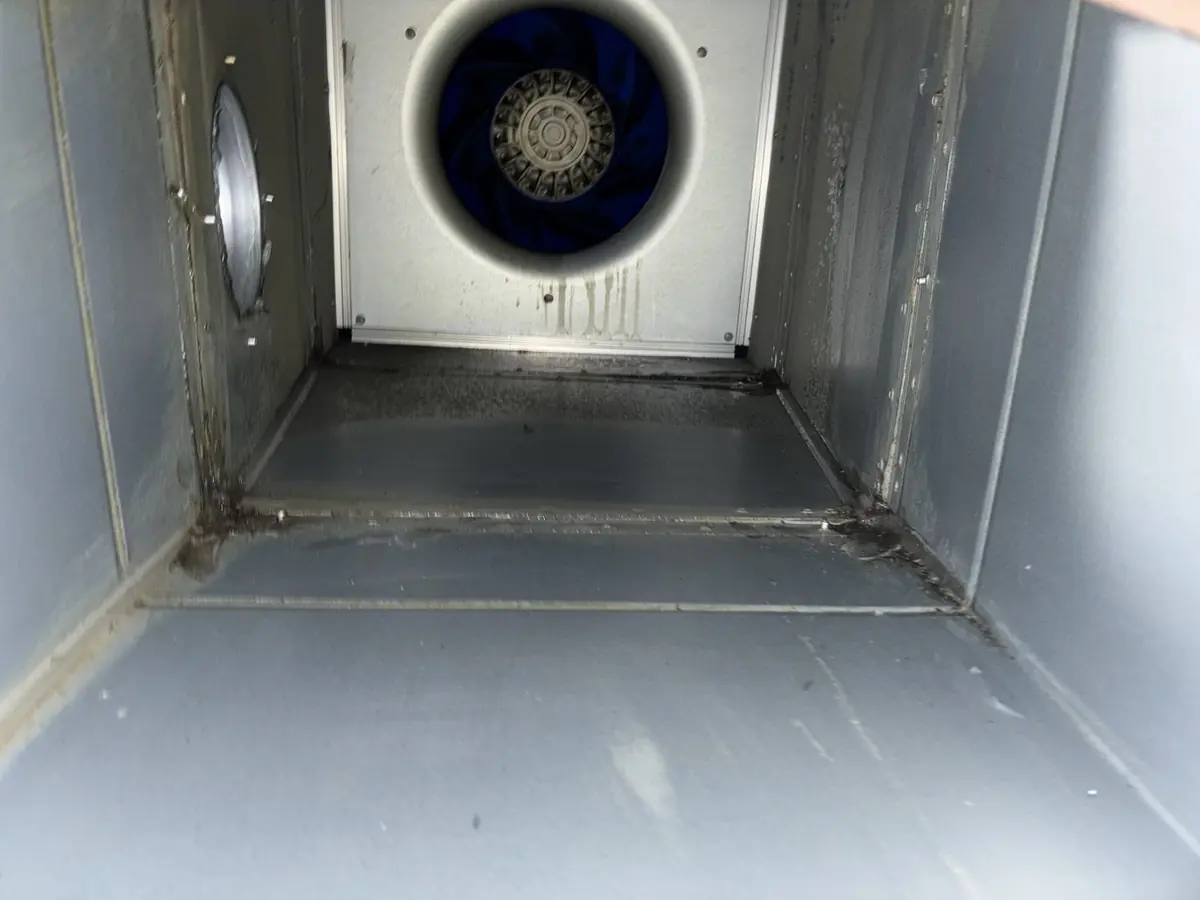
Grease in an extract system is not the light film people imagine. In the filter trays it collects as a thick amber liquid, deep enough to pour. Inside the ductwork it forms a dark, tacky coating on every internal surface — the floor of the duct, the walls, the joints, the access panel frames.
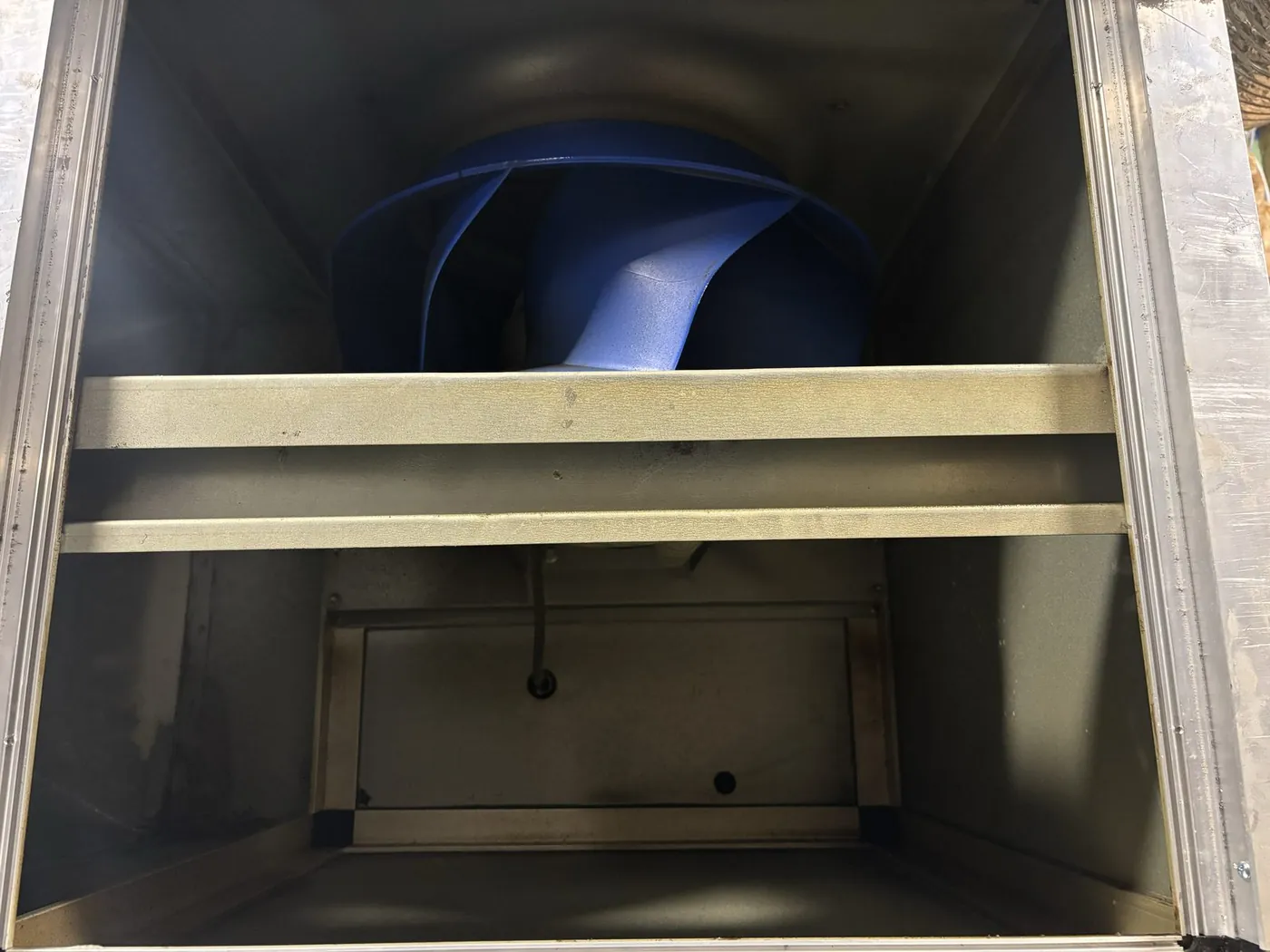
The fan is usually the worst of it. Grease thrown off the impeller builds on the blades and the inside of the housing, which both reduces extraction performance and puts a fuel source directly next to a running motor.
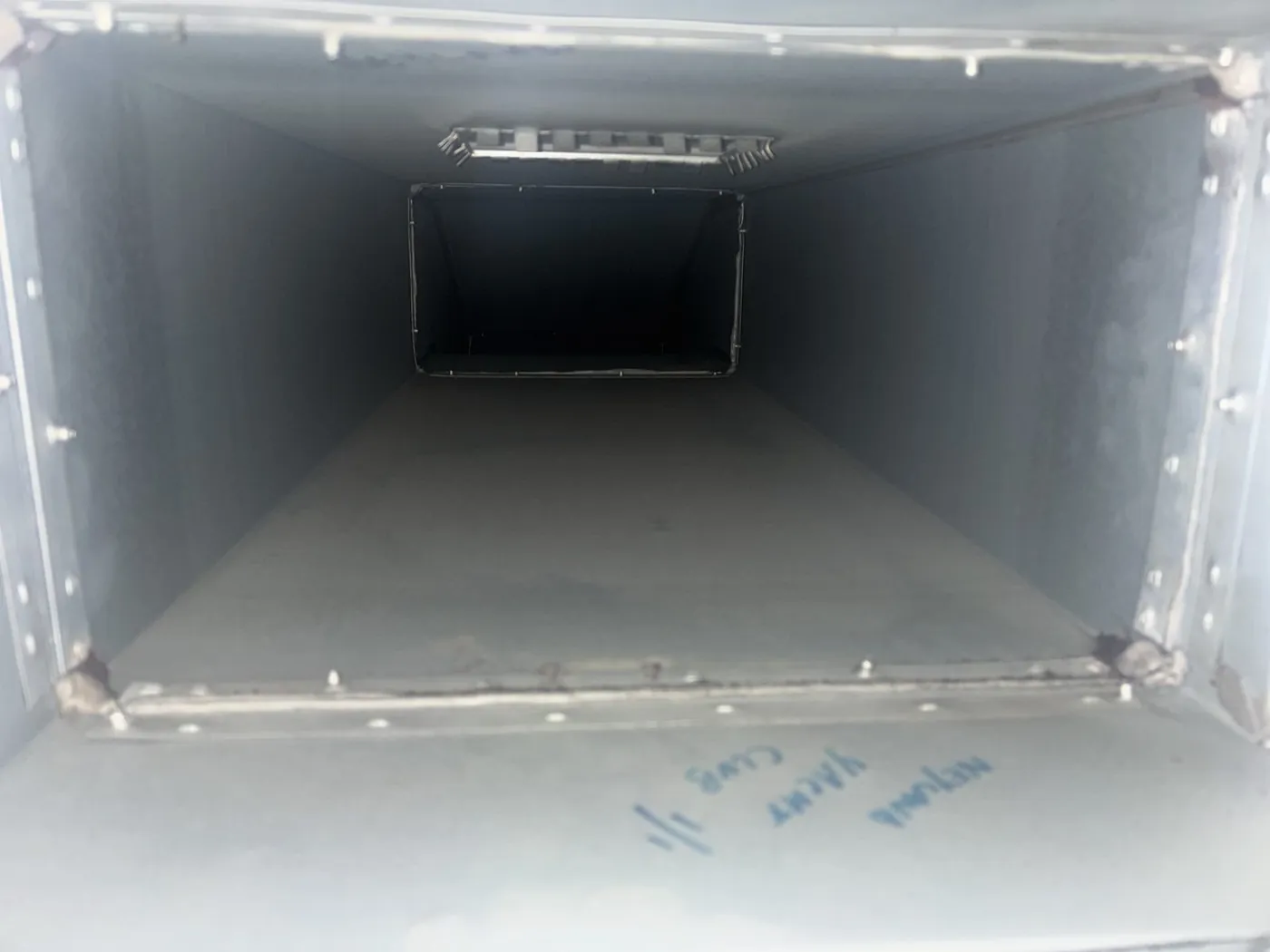
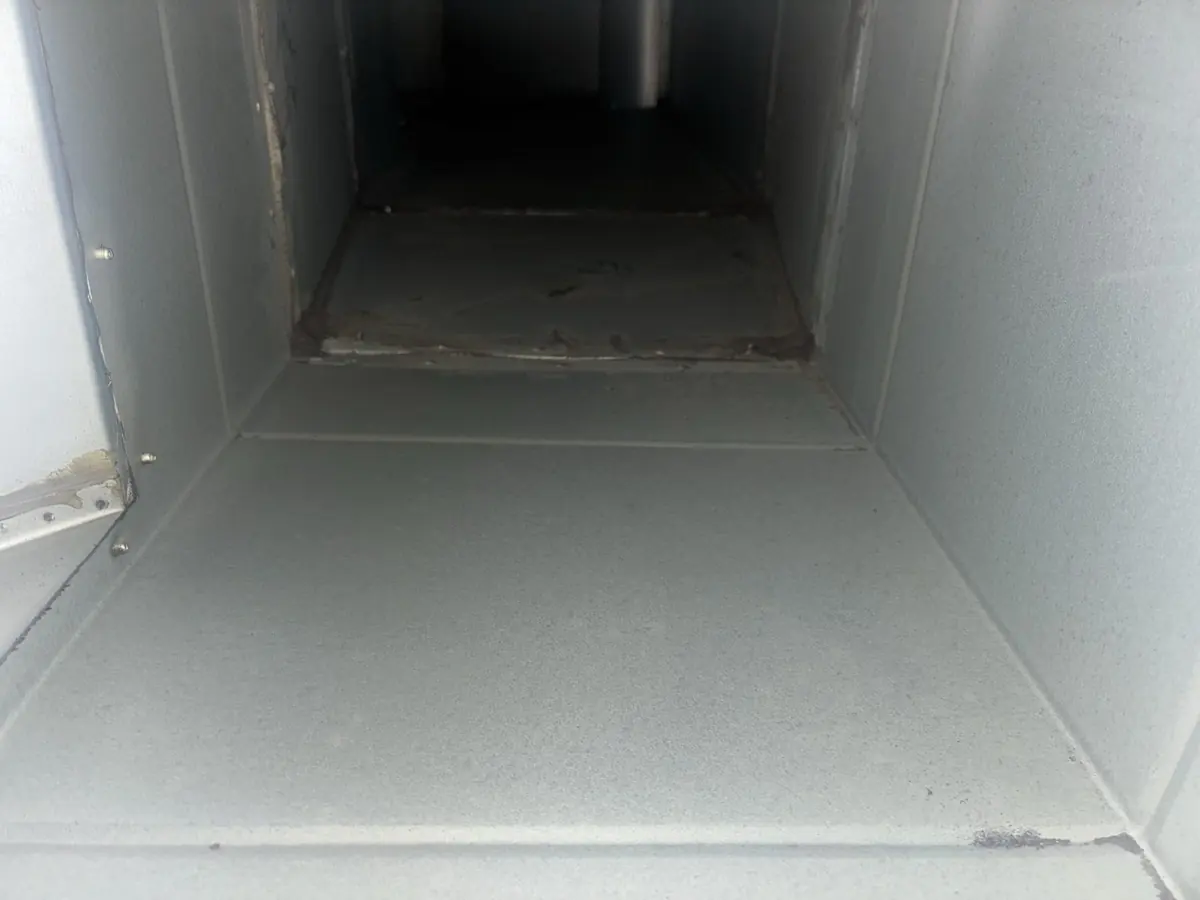
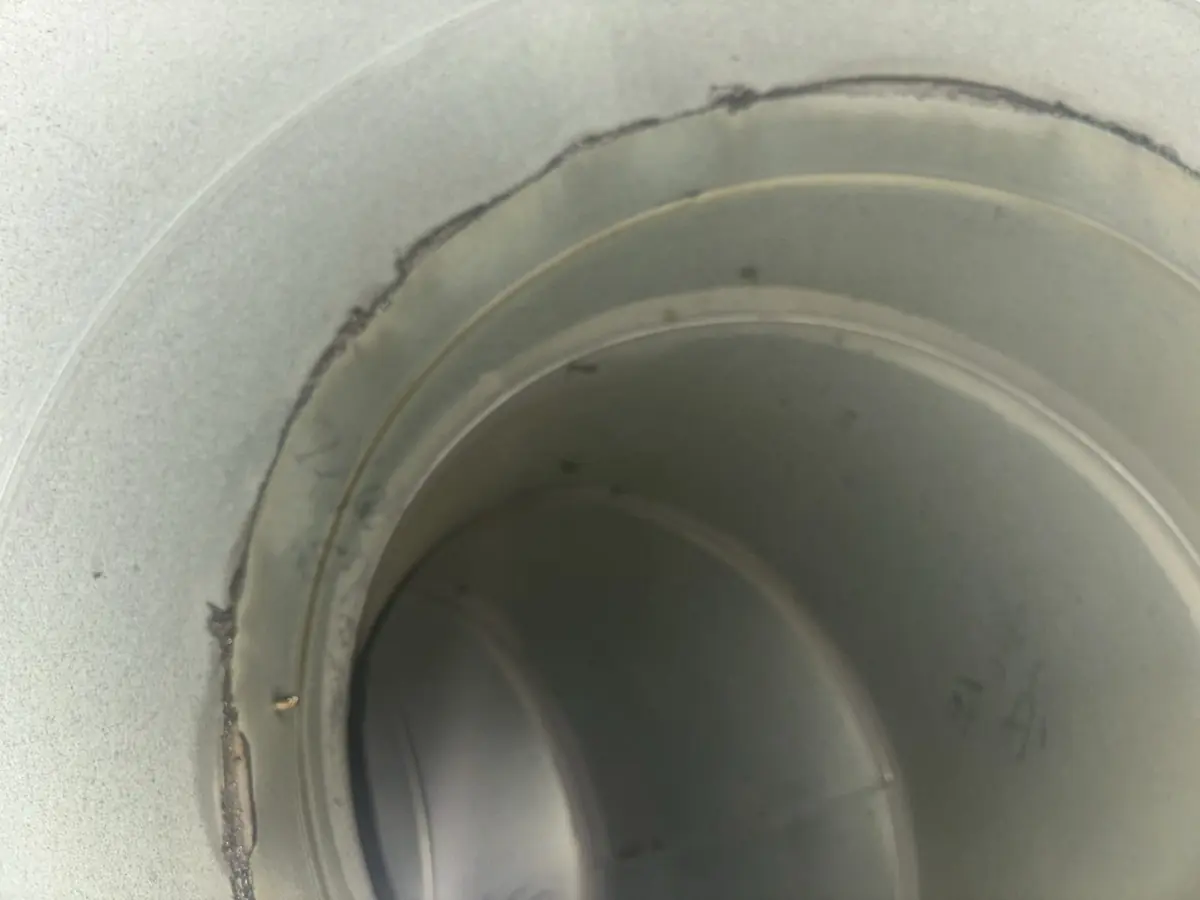
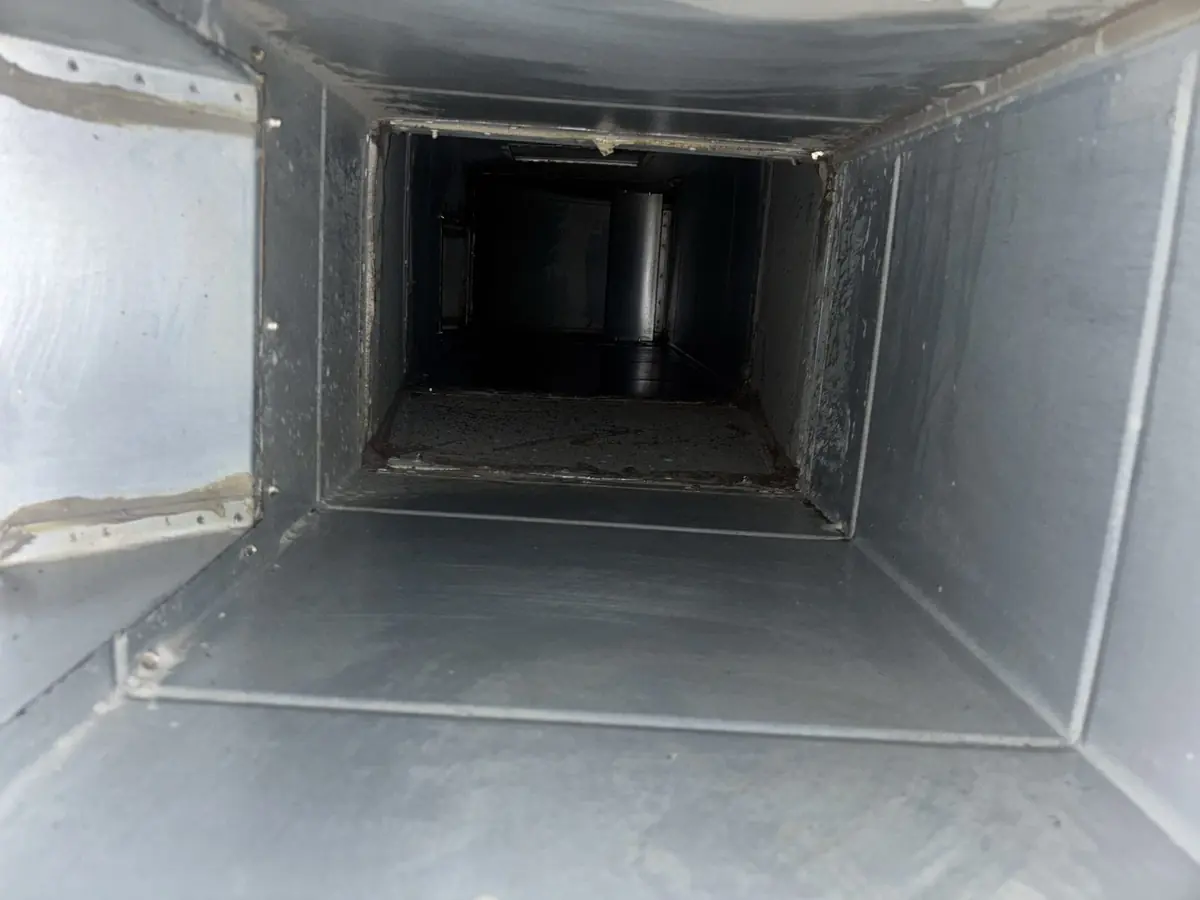
After cleaning, the same surfaces come back to bare metal. The difference is not subtle, and it is the reason before-and-after photographs at each test point should be standard in any report you are given.
Why it matters beyond cleanliness
Grease is fuel. A kitchen extract system carrying 200 microns of deposit through its ductwork has a continuous combustible path running from the cooking line, through the ceiling void, to the roof. If a flare-up reaches the canopy, that is the route the fire takes — inside the building fabric, where it is difficult to reach and difficult to stop.
This is why insurers ask about it. Most commercial kitchen policies require the extract system to be cleaned to a recognised standard at an appropriate frequency, with documentation to prove it. After a fire, the certificate is one of the first things a loss adjuster asks for. A missing or inadequate record is a common reason for a claim to be reduced or refused.
Environmental health officers and fire risk assessors look for the same records.
What your report should contain
The job at The Bar produced a Post Clean Verification Report. If you have had extract cleaning done and your paperwork does not contain the following, you have an invoice rather than evidence:
- —Pre- and post-clean grease depth readings, in microns, at multiple defined test points — not a single reading, and not a general statement that the system is clean
- —Photographic evidence of each section before and after: canopy, plenum, ductwork at intervals, fan
- —A written description of the system layout, so it is clear what was included
- —A schematic showing what was accessible and what was not
- —A certificate stating the site, the system location, the date of the clean, the operatives, and — critically — the next clean date
- —A clear statement of anything that could not be reached, and what would be needed to reach it
That last point is worth dwelling on. No report should claim a complete clean if access panels are missing or sections are unreachable. An honest report says so and tells you what installing access would involve.
How often this kitchen needs doing
The certificate for this job set the next clean date at 5 November 2026 — six months on.
Frequency depends on how hard the kitchen works. As a general guide: light use such as a small café or community hall runs to around twelve months; moderate use covering most restaurants, pubs, hotels and care homes runs to six; heavy use such as a busy takeaway or a high-volume city kitchen needs attention every three.
Those are starting points rather than rules. A pub doing food seven days through a Pembrokeshire summer season and quietly through winter is not the same proposition in August as it is in February, and the sensible approach is to set frequency from actual measured readings over time rather than from a chart.
Getting your own system assessed
If you run a commercial kitchen in Pembrokeshire — Neyland, Milford Haven, Haverfordwest, Tenby, Pembroke, Saundersfoot, Fishguard or anywhere across the county — and you are not certain when your extract system was last properly cleaned, or whether your existing paperwork would satisfy an insurer, get in touch with your kitchen details.
We arrange TR19-focused kitchen extract cleaning through specialist providers who work to this standard of documentation. Quotes are free, and there is no obligation.
*The photographs and readings in this article are from a real job carried out in Neyland in May 2026, published with the site owner's permission. The Bar is operated by the same owner as this website.*
Related Service
Kitchen Canopy Cleaning
Professional cleaning for commercial kitchen canopies, hoods and extraction systems across Pembrokeshire.
Learn more about Kitchen Canopy CleaningAreas We Cover
We arrange kitchen extract cleaning quotes across all of Pembrokeshire and West Wales: