
If your kitchen extract system has been cleaned, you should have been given a certificate. Most operators file it without reading it. Then a fire happens, or an insurer asks, and the certificate turns out to say almost nothing.
This guide sets out what a TR19 certificate actually is, the seven things a valid one must contain, what it should cost, and how to judge the one sitting in your folder right now.
What a TR19 certificate is
TR19 Grease is the guidance document published by BESA — the Building Engineering Services Association — covering fire risk management of grease accumulation in kitchen extract systems. It is the reference point UK insurers, fire risk assessors and environmental health officers use when they want to know whether a system has been properly maintained.
A TR19 certificate is the document a contractor issues after cleaning, recording what was done and to what standard. It is not a licence or a legal permit. It is evidence, and its entire value lies in how specific it is.
There is an important distinction worth understanding: a certificate confirms that a clean was carried out in accordance with TR19 guidance. It does not make a company "TR19 certified" — that is not a thing that exists. Be wary of any contractor who describes themselves that way, because it suggests they have not read the document they are claiming to work to.
The seven things a valid certificate must contain
1. Grease depth readings, in microns, before and after
This is the single most important item and the one most commonly missing. Grease deposit is measured as wet film thickness at defined test points through the system, before cleaning and again afterwards.
TR19 Grease works to a mean grease depth of 50 microns as the trigger point at which a system requires cleaning. Your certificate should show where you were before, and where you are now.
From a real job carried out in a harbourside pub kitchen in West Wales in May 2026:
| Test point | Pre-clean | Post-clean |
|---|---|---|
| Canopy / extract plenum | 200 microns | Under 25 microns |
| Ductwork, 1m from canopy | 200 microns | Under 25 microns |
| Ductwork, 3m from canopy | 200 microns | Under 25 microns |
| Extraction fan | 200 microns | Under 25 microns |
| System average | 200 microns | Under 25 microns |
That kitchen was running at four times the trigger figure, and — critically — it was reading that three metres down the duct run and at the fan, not only at the canopy where anyone can see.
A single reading at the canopy tells you almost nothing. Insist on multiple defined points.
2. The date of the clean and the next clean date
The next clean date is what turns a certificate into a maintenance record. It demonstrates a cycle rather than a one-off. Without it, you have proof that something happened once.
3. The site and system location
Specific enough to identify which system was cleaned. On a multi-kitchen site this matters a great deal.
4. Named operatives
Who actually did the work. A certificate issued by a company with no named individual is weaker evidence.
5. Photographic evidence, before and after
Canopy, plenum behind the filters, ductwork at intervals along its run, and the fan. From the same position each time, so the comparison is real.
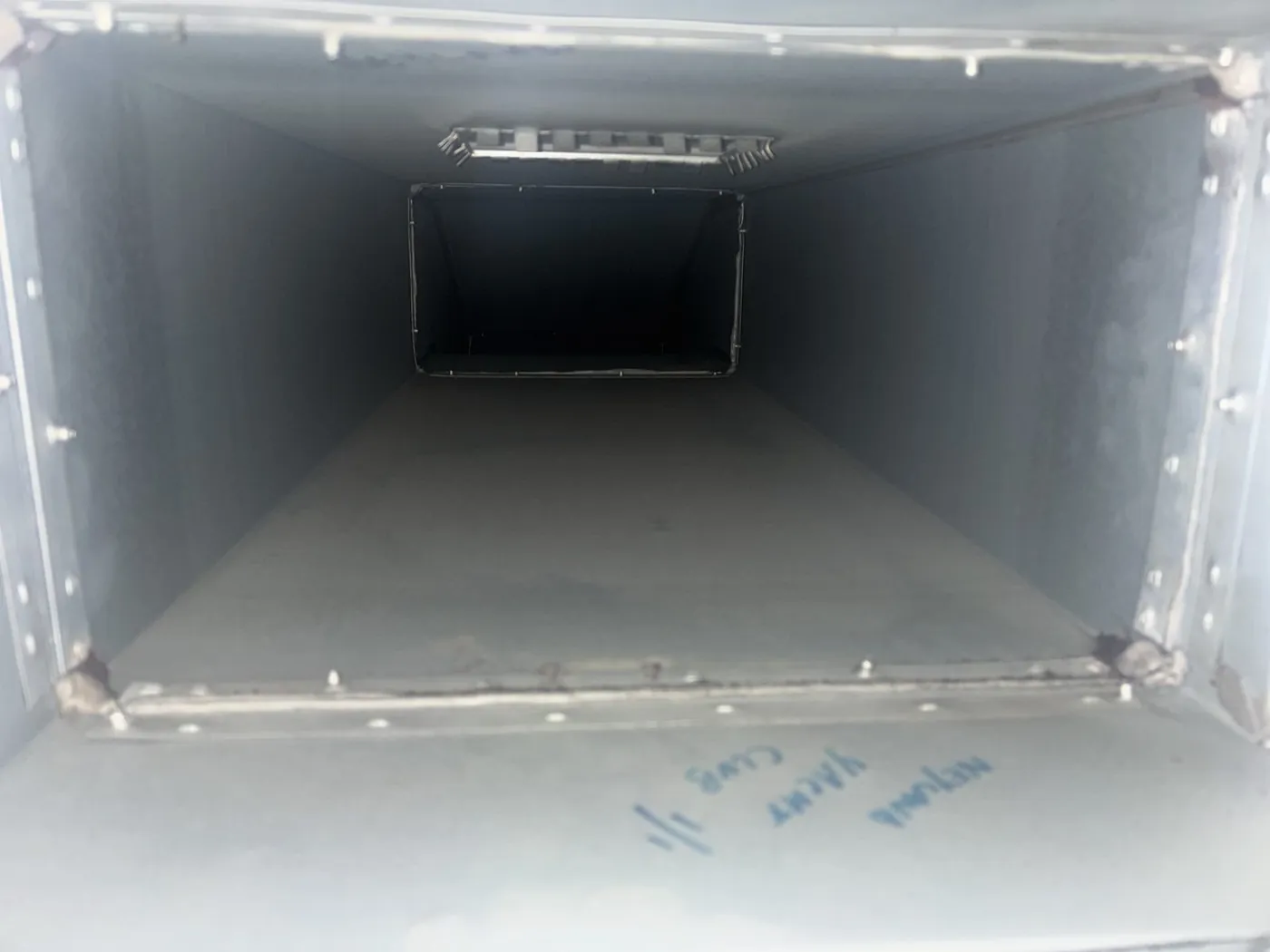
6. A written description of the system, with a schematic
What the system consists of, and a drawing showing where access points are. This is how you verify the whole run was covered rather than just the reachable parts.
7. An honest statement of what could not be reached
No report should claim complete coverage if sections were inaccessible. A good certificate says plainly which parts could not be reached and what would be needed to reach them — usually additional access panels.
A certificate claiming total coverage, with no caveats, on a system with limited access, is a certificate that has not been thought about.
What a TR19 certificate costs
The certificate itself is not a separate purchase. It should be included in the price of the clean, and you should be suspicious of any contractor who charges extra for documentation.
What varies is the price of the clean it documents, driven by:
- —System size and duct run length — a single canopy with three metres of duct is a different job from a multi-canopy system running through a loft void to a roof termination
- —Access — systems with adequate access panels are far quicker; retrofitting panels adds cost
- —Grease loading — a system at 200 microns takes longer than one at 60
- —Frequency — a system on a maintained six-month cycle is cheaper each visit than one cleaned after three years of neglect
As a rough guide for UK commercial kitchens, a small café or takeaway system typically falls in the low hundreds, a mid-sized restaurant or pub kitchen in the mid hundreds, and larger multi-canopy or hotel systems into four figures. Anyone quoting a fixed price without seeing the system is guessing.
The cheapest quote is frequently the one that produces the weakest certificate, because taking readings at four points, photographing each section and writing a proper report takes time that a low price does not cover.
What about a TR19 certificate template?
People search for this hoping to produce their own. You cannot self-certify — the value of the document lies entirely in it being issued by the party that carried out the work, with their readings, their photographs and their named operatives.
What you *can* usefully do is take the seven-point list above and use it as a checklist to assess certificates you are given. If a contractor's template omits readings or photographs, ask why before you book.
How to check the one you already have
Take out your last certificate and work through it:
- —Does it contain grease depth readings in microns, at more than one point, before and after?
- —Are there photographs of the inside of the ductwork?
- —Does it state the next clean date?
- —Does it name the operatives?
- —Does it say what could not be reached?
If the answer to two or more is no, you have an invoice with a logo on it. That is not the same as evidence, and you may not discover the difference until the worst possible moment.
Why insurers ask for it
Grease is fuel. A duct run carrying a heavy deposit is a continuous combustible path from the cooking line, through the building fabric, to the roof. Most commercial kitchen policies carry a condition requiring the extract system to be maintained to a recognised standard at an appropriate frequency, with documentation.
After a grease-related fire, a loss adjuster does not ask whether the kitchen looked clean. They ask for the records. An inadequate certificate is a common reason for a claim to be reduced or challenged.
Getting a quote
We arrange TR19-focused kitchen extract cleaning through specialist providers who document to the standard set out above, across Pembrokeshire and West Wales. Quotes are free and there is no obligation.
If you are outside our area, use the seven-point checklist when you approach local contractors — it will tell you very quickly which ones take the documentation seriously.
*Readings and photographs in this article are from a real job carried out in Neyland, Pembrokeshire in May 2026, published with the site owner's permission. That pub is operated by the same owner as this website.*
Related Service
TR19 Extract Cleaning
Full TR19-focused extract cleaning across Pembrokeshire with post-clean certification at every visit.
Learn more about TR19 Extract CleaningAreas We Cover
We arrange kitchen extract cleaning quotes across all of Pembrokeshire and West Wales: